When relationships stop being enough
ExecLead wasn’t struggling.
The firm was rapidly growing, doing meaningful work and building strong relationships with clients. Founded by Managing Partner Andrew Odze, ExecLead had established itself as a trusted advisor to leadership teams navigating their most complex organizational challenges.
“We have a great Rolodex and it’s generated a lot of great clients. We’ve done superior work with those clients so we’ve been able to deepen relationships.”
That model worked. But over time, something started to surface.
“What we had not done is actually attract people that are outside of the network, or even in the network who aren’t that familiar with all that we do.”
The firm had grown. The work had evolved. The impact had magnified. But the story hadn’t.
When the flywheel isn’t fully spinning
The realization became clearer when Andrew and his team stepped back to understand how the business was actually growing.
“We literally built a flywheel…we saw four pieces of it.” Two of those pieces were working hard. Strong relationships paired with strong delivery.
But two weren’t. “The two of them around having your message and knowing where and who to take it to…those pieces were compromised.”
ExecLead had built a strong firm. It now needed to build a clear way for the market to understand it.
“We had focused so much on ‘what is our product’ and ‘what is our service’ and ‘what makes us great’…we hadn’t yet scaled how we take it to market.”
The idea that unlocked it
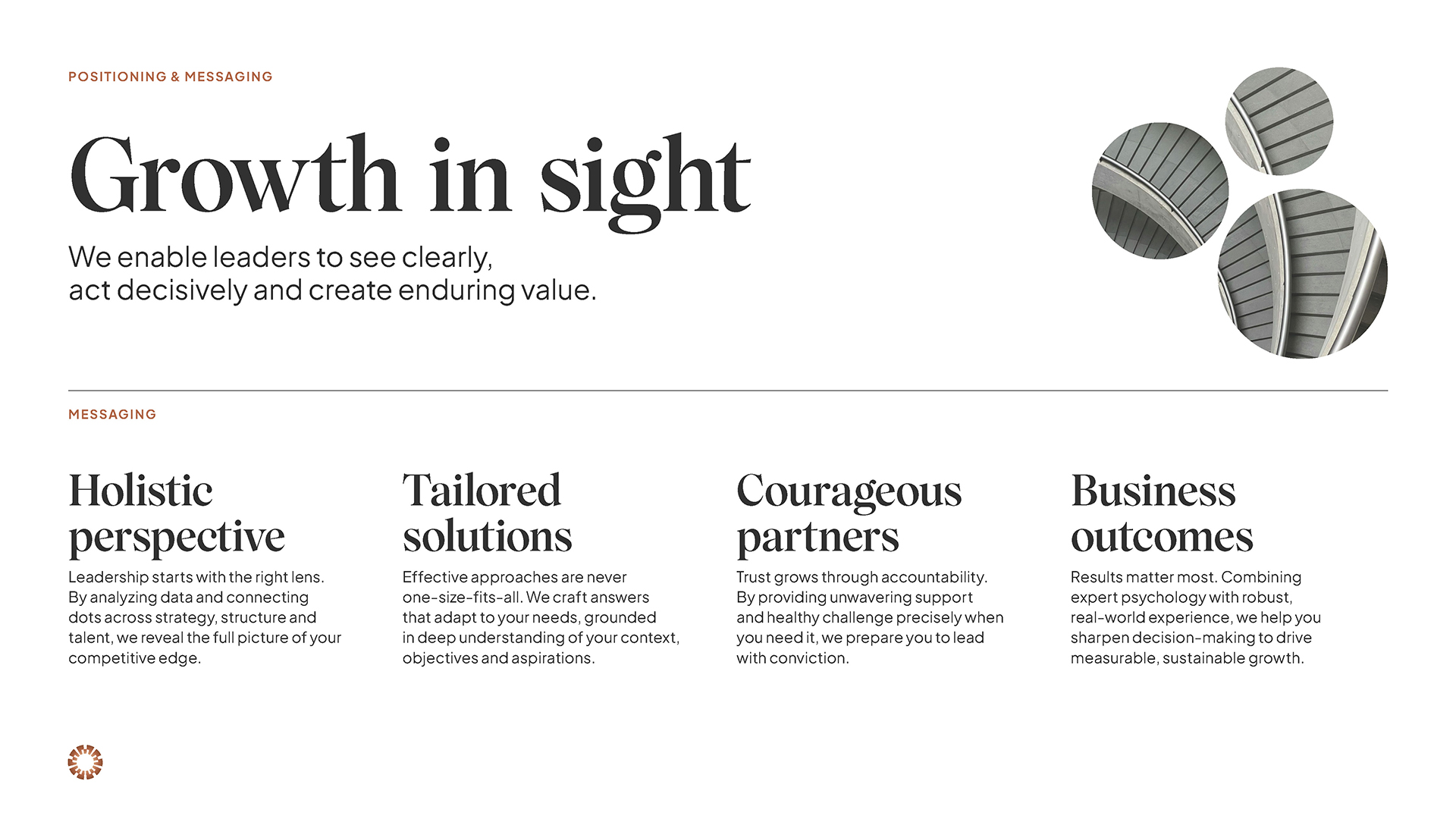
The turning point came when the team landed on a concept that reflected how they actually think: Growth in sight.
“Many of us are psychologists by background…so much of what we become has to do with what we choose to focus on…perception and perspective, judgment and decision making.”
But ExecLead wasn’t trying to sell psychology.
“As a management consulting firm, what we’re principally focused on for our clients is value creation. How do we grow them?”
Growth in sight was the missing link that connected the firm's DNA.
It translated how they think into how clients measure success. It also helped resolve a core tension in how they showed up. “We never wanted to position ourselves as management psychologists as a starting point…and yet at the same time, we’re very proud of the significant expertise.”
Making the invisible, visible
The most important insight came from clients.
“Years into their relationships with us, clients are still discovering what we are capable of.”
That wasn’t a capability issue. It was a visibility issue. And it revealed something bigger: the firm had been delivering more value than it was communicating.
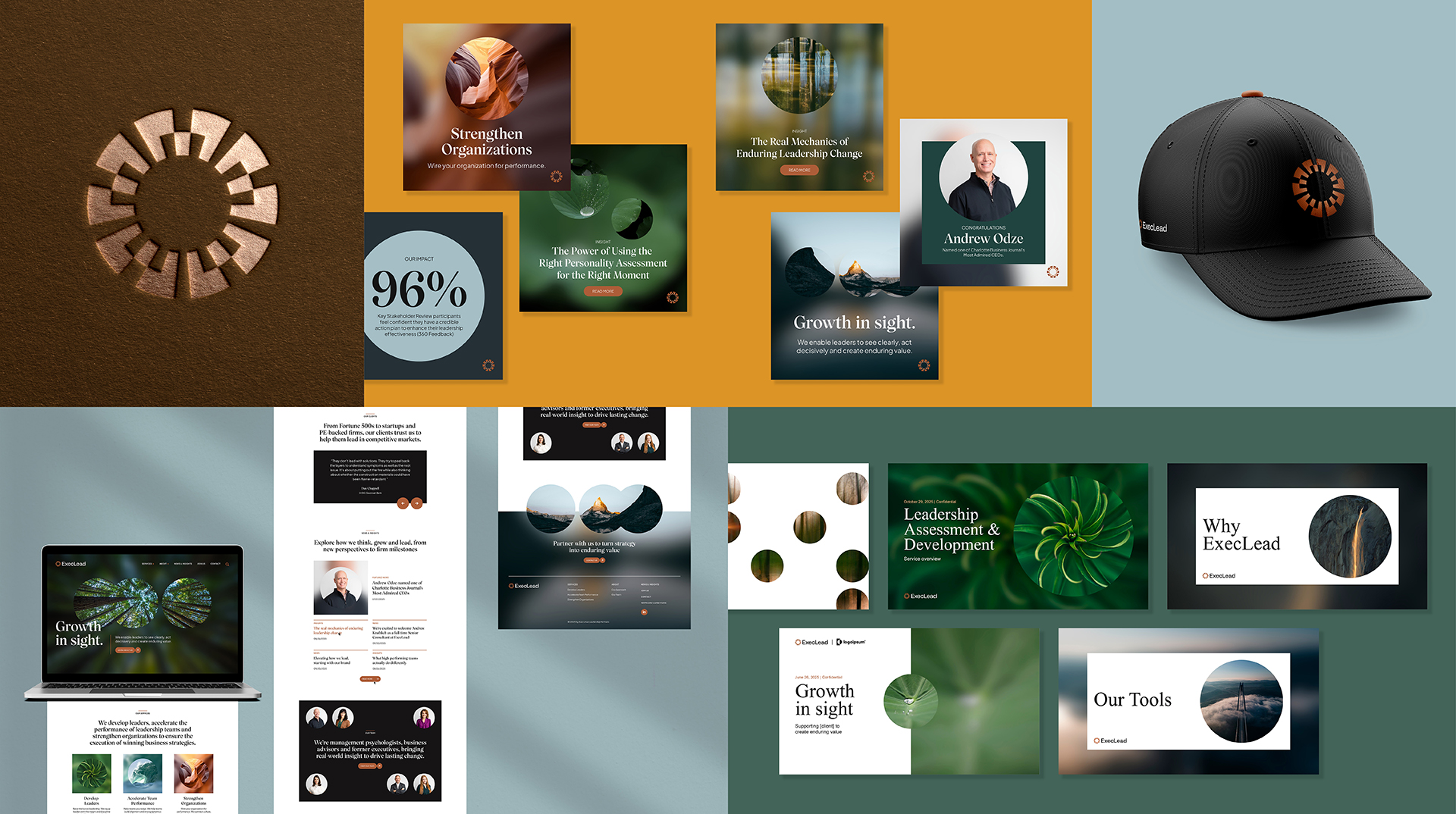
Once the new brand launched, it started to change quickly. “The number of clients who say to us, ‘Wow, I’ve seen your new branding. I’ve explored articles on your website. I’ve seen your videos’…it was all happening so fast.”
For the first time, ExecLead’s thinking was reaching people before the relationship did.
Key takeaway
Relationships are one of the most effective ways to start a firm. They create trust. They generate momentum.
But they also create a boundary.
Because relationships don’t often scale with your aspirations. Eventually, every firm built on trust runs into the same constraint: the people you know are no longer enough.
And the only way forward is clarity.
In Part 2, we explore why ExecLead refused to become more “sales-driven” and instead used a focus on clarity to change how clients engage and how the firm grows.