When we helped Cicero define its brand about 12 months ago, AI was still in its adolescence—brilliant, unpredictable, a little self-absorbed. Everyone was racing to sound smarter than everyone else. But the smartest brands weren’t the ones shouting about intelligence. They were the ones anchoring meaning.
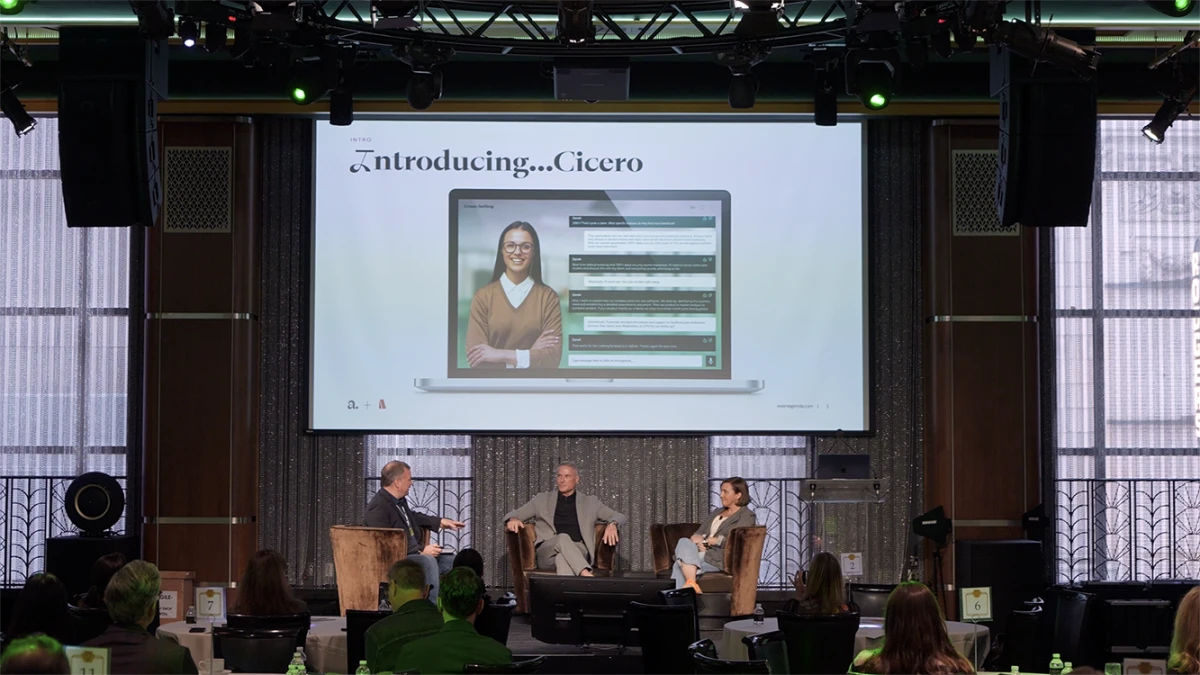
At our Transform Live panel with David Grabert, CMO of CGS, Claudia Mark, Head of Creative at Agenda and Vincent Roffers, Head of Strategy at Agenda, we talked about how Cicero was built for time, not trend. The world around it has changed—new models, new hype cycles, new fears—but the brand hasn’t aged out. It’s aged in.
How it happened
When we first took on the Cicero branding work, the temptation was to brand it like every other AI tool: fast, smart, revolutionary. But we took a different path. We treated it less like technology and more like a philosophy—a brand that stood for clarity in human communication and people’s mastery over the unpredictable. That’s why it still works today. The context evolved, but the core held.
The real lesson? When technology changes faster than you can market it, brand for the emotional constant, not the technical variable. Build from an idea that doesn’t need the algorithm to stay relevant.
A year later, the AI conversation feels older. The excitement has matured into discernment. The question isn’t “what can AI do?” but “what should it do—and who should we trust to do it?” Cicero’s answer is baked into the inspiration for its name: to elevate how humans reason and express when the answer isn’t totally clear. That’s the kind of idea that doesn’t expire.
Technology ages in dog years. Trust ages in decades. Build for the latter.